

At first glance, upgrading a PC sounds simple. Buy a new part, slot it into place, and you’re done. That said, many users fall into typical pitfalls that cost them time, money, and patience. By addressing the most common misconceptions surrounding upgrades, you’ll not only save yourself a lot of hassle, but also actually get more performance out of your system.
One of the most common misconceptions is about the power supply. Many people underestimate how important it is for stability and safety. A cheap, underpowered power supply cannot reliably power modern graphics cards or processors and will likely bottleneck as a result. It’s better to invest in a high-quality model with sufficient power reserves and protective circuits.
This not only protects you against system crashes, but also against potential hardware damage. There’s also a lot of confusion when it comes to RAM.
More RAM doesn’t automatically mean more speed. The key factors are whether your motherboard supports the clock speed and whether the modules are running in dual-channel or even quad-channel mode. Only then can the bandwidth be fully utilized.
If, on the other hand, you mix modules indiscriminately, you risk instability or a drop in performance. Another common misconception concerns graphics cards.
Many gamers buy a high-end GPU without paying attention to the rest of their hardware. A slow CPU or an outdated motherboard can severely hamper performance. This so-called “bottlenecking” means the graphics card never reaches its full potential.
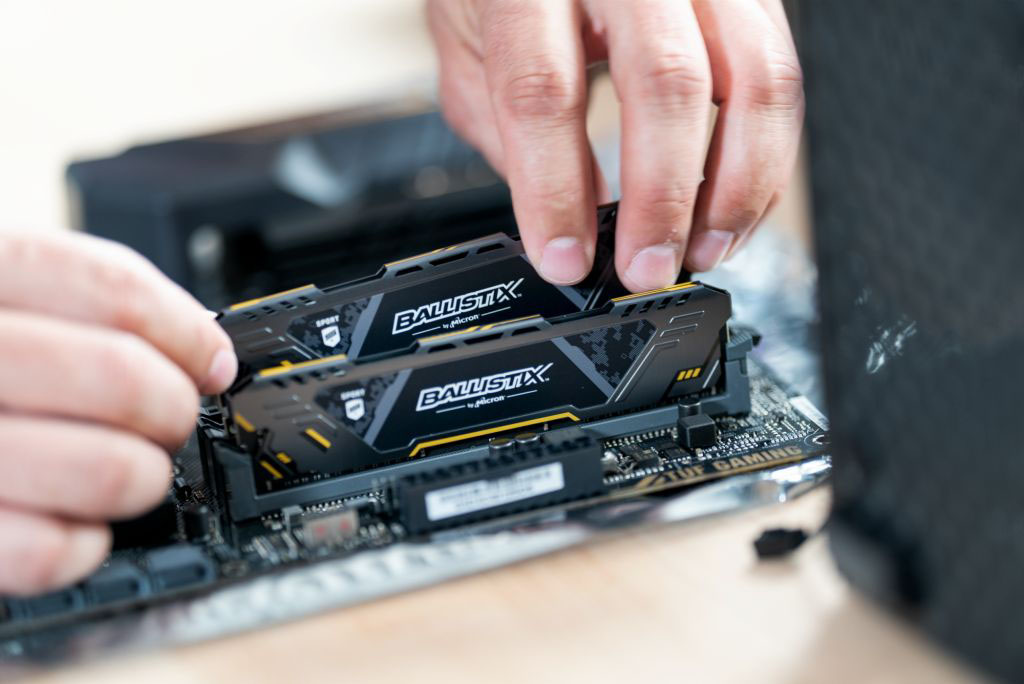
Ballistix
Before upgrading, it’s worth taking a holistic view of the entire system to identify any weak points. Cooling is often overlooked. Greater performance generates more heat, which is how standard cooling solutions quickly reach their limits. Whether you’re using a high-performance air cooler or an all-in-one (AiO) liquid cooling system, the key is to ensure that the CPU and GPU remain within a safe temperature range under load.
In addition, a well-designed airflow layout ensures that cool air is drawn in from the front or the bottom, while hot air is expelled via fans at the rear or top panel. This creates a clear airflow without turbulence, which keeps temperatures low. Last but not least, up-to-date drivers and BIOS versions are often underestimated.
Even the best hardware is of little use if it isn’t properly configured. It’s important to check the software when upgrading hardware. Stability and performance can be significantly improved with just a few clicks. If you’re aware of these common mistakes and avoid them, you’ll save money and actually get the performance boost you’re hoping for.
A PC upgrade isn’t a sure-fire success; it requires planning, technical understanding, and an eye for the bigger picture.
This article originally appeared on our sister publication PC-WELT and was translated and localized from German.