

Summary created by Smart Answers AI
In summary:
- Fox’s reported $22 billion acquisition of Roku, the leading US streaming platform reaching 100 million homes, is causing consumer anxiety and prompting searches for alternatives.
- PCWorld notes that while users can expect increased Fox content promotion and targeted advertising through data sharing, concerns about immediate changes may be overblown since the deal won’t close until 2027.
- Alternative platforms like Apple TV, Amazon Fire TV, and Google TV each offer different trade-offs in privacy, customization, and cost, but all have their own promotional limitations.
Fox is planning to acquire Roku for $22 billion, and a lot of folks are already preparing for the worst.
I’ve already received a half-dozen questions from readers about Roku alternatives to consider. Meanwhile, a couple of the top posts on the cord cutting sub-Reddit include a headline calling it a “disaster” for streaming and a thread discussing what to use instead.
While these mergers seldom work in consumers’ favor, there’s also a lot of hyperbole going around about what will happen next. I can help you consider some Roku alternatives, but you should also be realistic about what switching will accomplish.
Why is Fox buying Roku?
Fox‘s reasons for acquiring Roku are largely about scale. Roku is the most popular streaming platform in the United States, and it‘s in 100 million homes worldwide. The company makes most of its money not from selling smart TVs and streaming players, but from getting those users to watch ads and pay for more subscriptions. Accordingly, Fox wants to use Roku‘s reach to scale up its own advertising business and to help grow its subscription services.
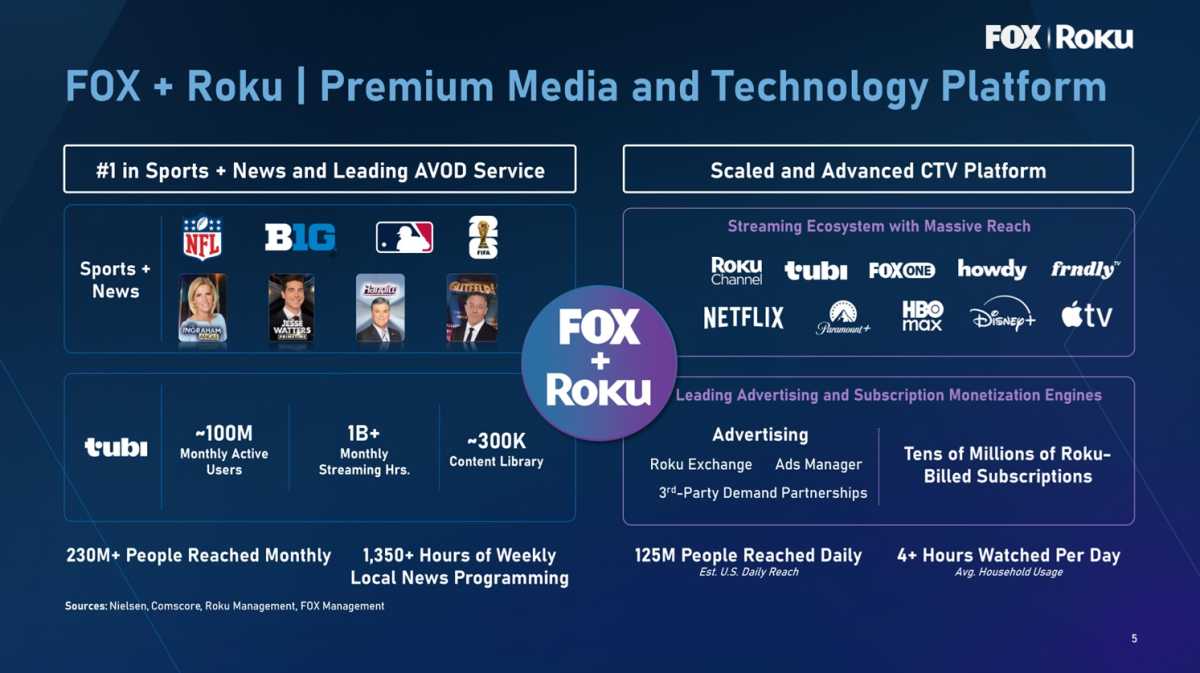
Translation: Big companies embiggening.
Fox Corporation
If you’re a Roku user, you can expect a couple things to happen as a result:
- In the same way that Roku promotes its own streaming services on its home screen, you’ll likely see more advertising for Fox One, Fox Nation, and Tubi on Roku devices.
- Roku already collects all kinds of data about you and your viewing habits; Fox and Roku plan to share this data to show you more targeted ads across all of their platforms.
For now, any other supposed fallout you’re seeing in articles or on social media is pure speculation. We don’t know how Roku’s Howdy and Frndly TV subscription services will factor into Fox’s plans, nor do we know the long-term fates of the Roku Channel and Fox‘s Tubi. (It’s hard to believe the two free streaming services will stay separate forever, though Fox says it will keep them that way for now.)
I’ve also seen some anxiety around Fox Corporation’s political affiliations and its ownership of Fox News. Whether you want to support Fox’s business is your decision, but the idea that Roku might turn into some right-wing propaganda platform seems overblown. At most, you might see more promotion of Fox properties (including Fox News and Fox Nation) on Roku’s home screen, but Roku should also understand when to back off, given that the whole point of the deal is to better understand users’ preferences.
In any case, the acquisition hasn’t actually happened yet, and the companies don’t expect to close the deal until the first half of 2027. It’ll be a while before Fox gets to influence Roku’s business in any major way.
Still want Roku alternatives?
If the prospect of Fox owning Roku still makes you want to jump ship, that’s understandable. Just keep in mind that the main things Roku and Fox are promising to do—amp up ad targeting and self-promote more of their own content—aren’t markedly different from what other streaming platforms are doing already. To wit:
Amazon Fire TV
Jared Newman / Foundry
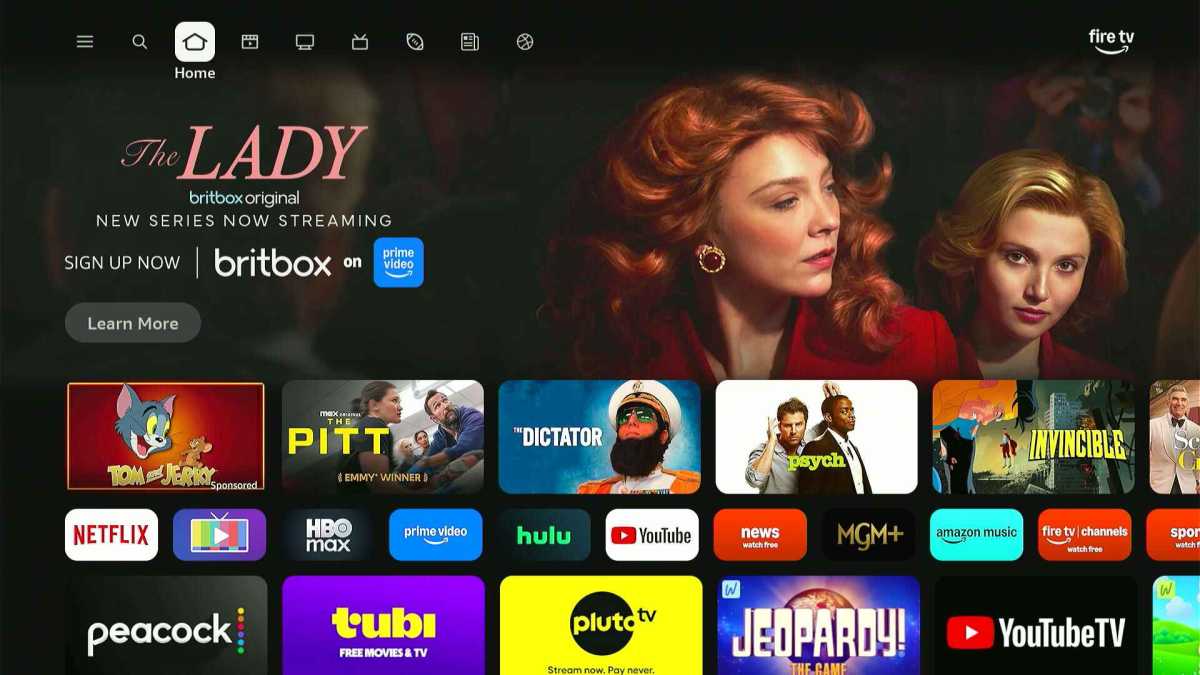
Amazon remains a major Roku rival, with lots of low-cost Fire TV devices to choose from. The platform puts a big emphasis on Alexa voice controls and more recently on AI features, like one that lets you jump to a scene by describing it.
But if you’re hoping to escape an excess of self-promotion on Roku devices, Amazon’s platform is even worse in that regard. The home screen is plastered with Amazon content recommendations, along with banner ads for things like car insurance and home appliances. And unlike with Roku, you can’t fine-tune the interface to work more in your favor.
(Also, if your concern with Roku involves an uptick in right-wing propaganda, remember that Amazon is the one that bankrolled Melania.)
Google TV
Jared Newman / Foundry
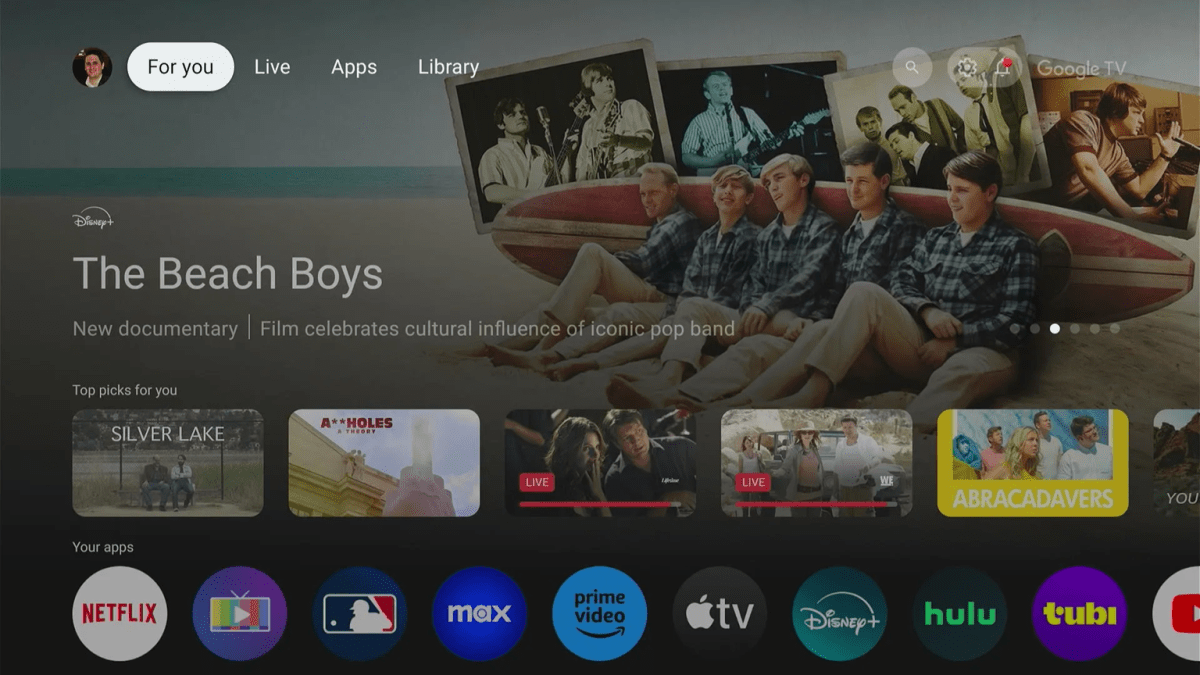
Google TV would be a natural landing point for anyone looking to leave the Roku ecosystem. While its home screen isn’t as simple, Google doesn’t go overboard with recommendations from YouTube or its movie store. You can also customize its home screen suggestions so they mostly stick to the streaming services you actually have. (Or, you can replace the default Google TV home screen outright.)
Just don’t expect Google’s ad targeting to be any less invasive than a combined Fox and Roku. Google is of course a giant of targeted advertising already, and if you use Google search, the company already has unmatched insight on what you’re into.
Another problem: There aren’t many Google TV devices to choose from right now beyond the $100 Google TV Streamer. Google effectively handed the job of producing lower-cost streaming devices to Walmart, which is failing to keep the good ones in stock.
Apple TV
Jared Newman / Foundry
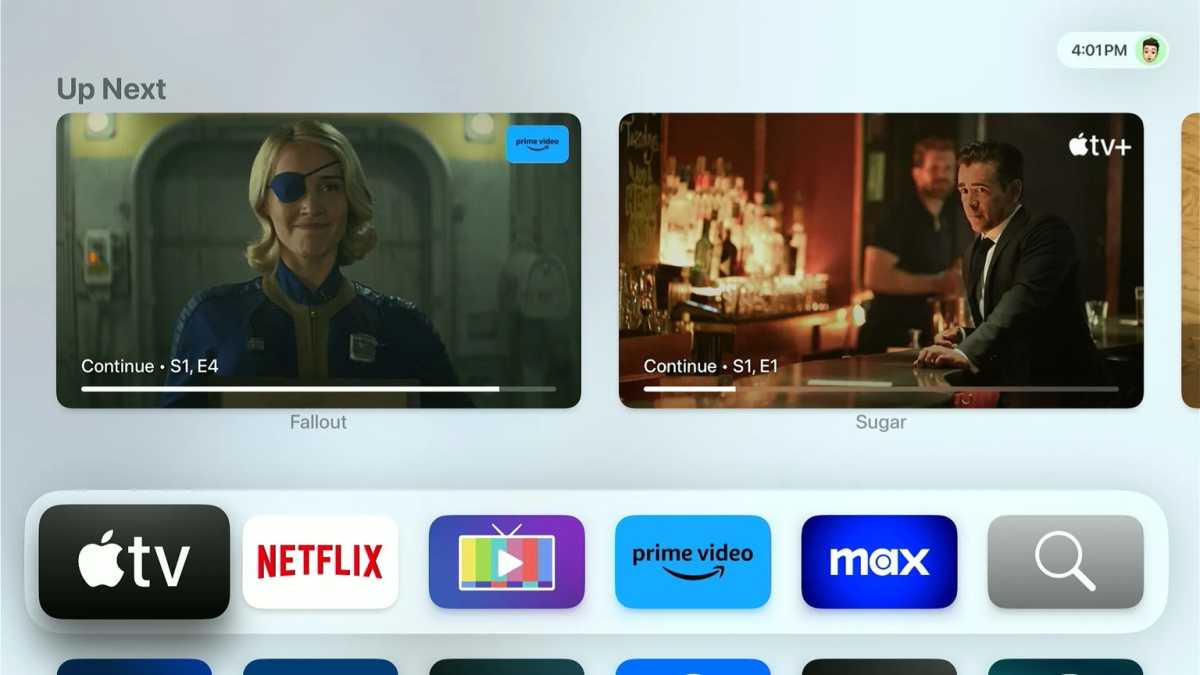
Among all the Roku alternatives to consider, Apple TV is to me the least ethically compromised. Yes, the default home screen leans heavily into promoting Apple TV content, but savvy streamers know how to customize it so it displays your favorite apps and in-progress shows instead, with no banner ads or promotional tiles in sight.
Meanwhile, Apple TV is the only streaming platform that makes companies ask for permission to track your activity across apps. You can even enable a setting to deny that permission by default.
The catch, of course, is the price. An Apple TV 4K box costs $129, more than triple the price of a Roku Streaming Stick Plus or Amazon Fire TV Stick 4K Select.
Now what?
From what I’ve seen so far, the fears around Fox and Roku are less about the particulars of the acquisition and more about general anxiety with technology and the state of streaming TV. This is hardly the first streaming media megamerger we’ve gone through, and they invariably lead to broken promises, higher prices, reduced content, and more ads.
So it’s no surprise that everyone’s bracing for a rerun. Being aware of the alternatives is always worthwhile, but the sad reality is that the show always ends the same way.
Sign up for Jared’s Cord Cutter Weekly newsletter for more streaming TV advice.