


Dhruv Bhutani / Android Authority
There’s a lot to love about the current crop of foldables. Every time I pick up the Pixel 10 Pro Fold or the razor-thin Galaxy Z Fold 7, or the absolutely gorgeous OPPO Find N6 with its impossibly flat display, I feel like I am holding a piece of the future that has finally arrived. The hardware jank that defined the early years of the foldable category is officially dead, replaced by titanium frames and hinges so smooth they feel like precision-designed machinery. In fact, it is a testament to how far Samsung, Google, and OPPO have pushed the envelope while Apple has sat quietly on the sidelines biding its time.
Android foldables solved the hardware problem. They still haven’t solved the experience.
But as a long-time tech and smartphone enthusiast, I have learned that hardware brilliance only gets you so far. After the initial wow factor of unfolding the Pixel 10 Pro Fold wears off, I am always left staring at the same old software inconsistencies and stretched phone apps that have plagued Android tablets for a decade. Even with the hardware solved, the experience feels like it is stuck in a perpetual beta. That is exactly why I’m eager to see Apple’s oft-rumored foldable come to fruition sometime later this year.
I am not waiting for Apple to invent the foldable; I am waiting for it to fix the software frictions that Android foldables, over half a decade in, still cannot seem to shake.
Are you satisfied with the current state of foldables?
0 votes
Android foldables have solved the engineering problem

Ryan Haines / Android Authority
If you had told me three years ago that a book-style foldable would weigh just 215 grams, I would have called you an optimist. But that is exactly where the Galaxy Z Fold 7 sits today. Samsung also finally leaned into the ultra flagship branding for its foldable, equipping it with the same 200MP main sensor found in the S26 Ultra. The hinge is now so recessed that the gap is practically gone, and the titanium frame feels like a robust piece of engineering that won’t break down on a single fall. It is a far cry from the original Fold, which felt like a prototype.
Between titanium frames, IP68 ratings and creaseless displays, the hardware is no longer a problem.
Then there is the OPPO Find N6, which has arguably the most impressive display tech I have ever seen so far. OPPO uses a liquid-printed structural layer beneath the 8.12-inch panel that makes the crease practically impossible to find with your finger. Even under direct sunlight, where the Z Fold 7 still shows a slight dip, the Find N6 remains flat. This is as close to a completely creaseless foldable as we’ve come across yet, and a genuine engineering marvel that makes the inner display feel like a solid piece of glass. Coupled with 80W fast charging and the Snapdragon 8 Elite Gen 5, this is a hardware beast that can keep up with most slab phones.

Joe Maring / Android Authority
Even Google has finally leaned into its pro identity with the Pixel 10 Pro Fold, which is a far cry from the awkward, passport-sized experiment of the first generation. Instead, it has morphed into a 5.2mm thin slab of glass and steel when unfolded, even if it remains a bit of a chonker in the pocket as far as weight goes. What makes it special is the new gearless hinge. Google stripped out the complex internal gears to achieve a full IP68 rating, making it the first foldable that I actually trust taking to the pool or a dusty construction site.
It still won’t win a benchmark war against the Snapdragon 8 Elite, but the days of overheating and modem drops are also over. From an engineering standpoint, Google has caught up, even if it chose durability and thermal headroom over the razor-thin elegance of its Chinese competitors.
All that to say that from a mechanical and aesthetic perspective, Android OEMs have done their homework. They have solved the physical friction that kept people away from foldables. The reliability is there, the durability is there, and the aesthetics are finally matching the premium price tag. It is astounding to see how much progress has been made in just a few short years.
Software still feels like a work in progress

C. Scott Brown / Android Authority
Despite all the titanium and advancements made to the screen technology, the experience of actually using these devices still feels like a work in progress. Android 16 has made massive strides in large-screen support, but the ecosystem remains fragmented. When you open a Galaxy Z Fold 7, the software does its best to adapt to the larger screen, and does a decent-enough job too, but all too often, it feels like a glorified window resize rather than a meaningful change in how you interact with the device.
The transition from the cover screen to the internal display is where the software jank continues to exist. On the Pixel 10 Pro Fold, you might be scrolling through a list in a third-party app on the outer screen, but when you unfold, the app often resets its position or simply stretches the UI until everything looks comically large. Google’s Material design scaling handles this better than most, but it cannot force third-party developers to care about unique aspect ratios. In some cases, we are still seeing letterboxing on apps that should do better, and buttons that look like they belong on a compact phone screen, not an 8-inch tablet.
All too often, foldables feel like a stretched-out phone, not a tablet in your pocket.
Many major apps still treat the inner screen as a big phone screen rather than a small desktop. And that leads to a persistent feeling of “betaness” that I find hard to ignore. Yes, I made up that word, but you know what I mean.
You are constantly resizing or forcing third-party apps to restart just to get a layout that does not look broken. For a device that costs nearly $2,000, “good enough” software should not be the standard. Plus, the multitasking gestures on modern Android foldables are clever, but they still feel like a hack to fix an underlying app ecosystem problem.
Apple might not be first, but it is just better timed

Paul Jones / Android Authority
And this is precisely why I am waiting for Apple. The iPhone Fold — reportedly coming with a 5.5-inch cover screen and a 7.8-inch inner display — will not be starting from scratch. Apple has spent over a decade optimizing iPadOS for various screen sizes and aspect ratios. When that rumored 7.8-inch screen unfolds, it should not just show me a bigger version of the iPhone’s home page. It will, hopefully, trigger a shift into a condensed version of the iPad UI.
Apple doesn’t need to build a foldable ecosystem. It already has one.
The 4:3 aspect ratio that Apple is rumored to use is the key. While Samsung and Google have chased various tall or wide formats, Apple knows that 4:3 is the gold standard for productivity and reading. It is the same ratio as the iPad Mini, which is already a beloved form factor for a reason. The transition from a narrow 5.5-inch phone to a 7.8-inch tablet should make it feel like a deliberate, system-wide shift in capability. You are switching over from a communication device to a creation and productivity-focused device in one swift motion.
Imagine unfolding your phone and having the OS instantly surface the iPad’s dock, its split-screen multitasking, or its proper cursor support. Apple does not have to convince developers to optimize for a new foldable category. They already have millions of apps designed for the iPad Mini that will fit this 7.8-inch canvas almost perfectly on day one. That’s my hope: The iPhone Fold will likely be a tablet that happens to fold into a phone, whereas Android foldables often feel like a phone that is trying very hard to be a tablet. That distinction is small but vital for a better user experience.
The App Store is the real differentiator
Rita El Khoury / Android Authority
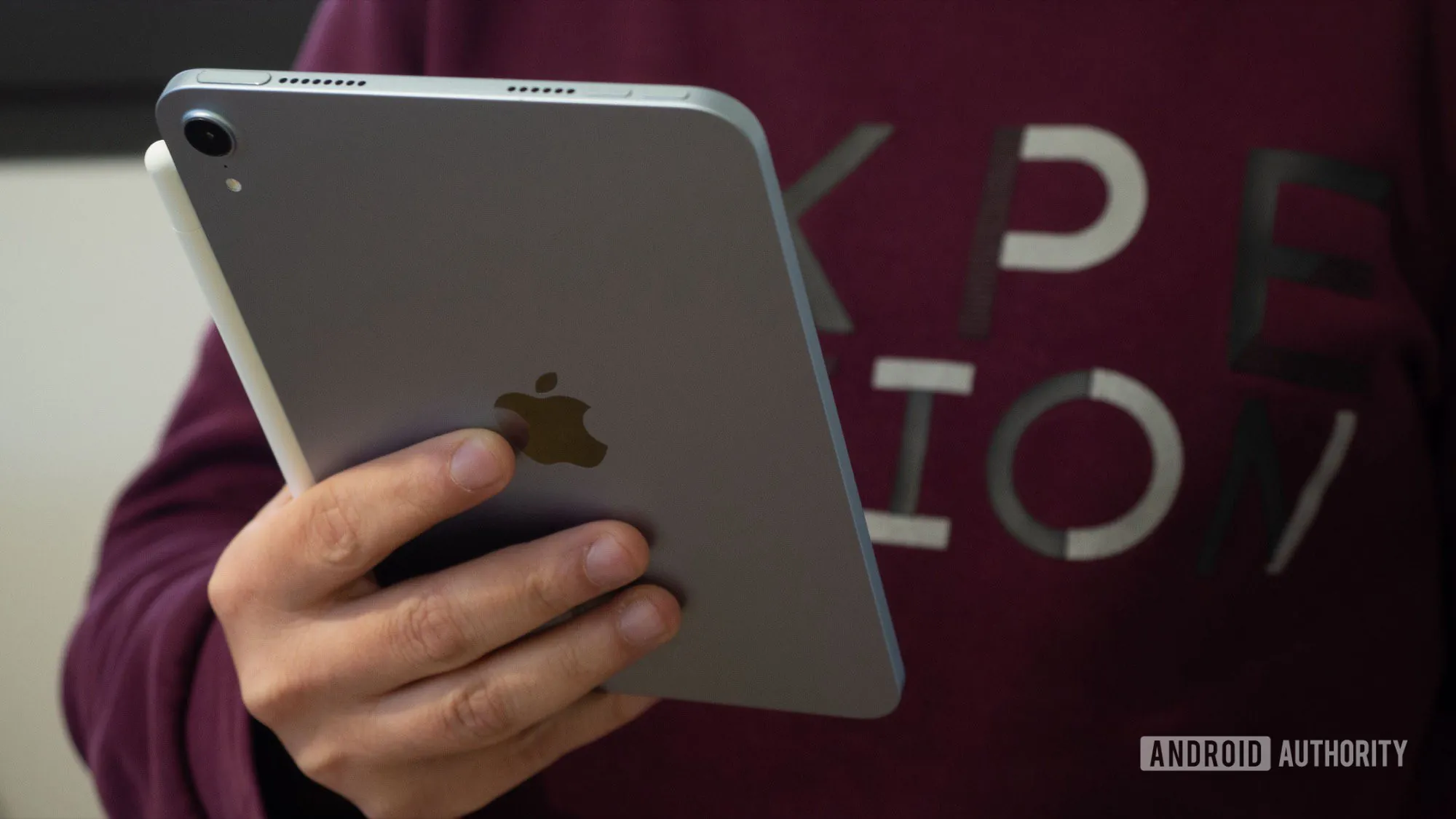
Which brings us to the crux of the matter. The real reason to wait for the iPhone Fold is not the hinge or the processor; it is the App Store. Android has plenty of apps, but the quality of tablet-first software continues to lag compared to the iPad ecosystem. If you are a creative professional or a power user, the difference is night and day. On the iPad, apps are built to maximize the use of the larger display. They feature sidebars, multi-column views, and desktop-class toolbars that simply do not exist in their Android equivalents.
A foldable iPhone isn’t exciting because it folds. It’s exciting because of what runs on it.
On an iPad, you have Procreate, LumaFusion, Final Cut Pro, and Logic Pro. These aren’t just mobile versions of software, but professional-grade tools designed for touch and large displays. When the iPhone Fold arrives, these apps will almost certainly be compatible with it. The idea of having a device in my pocket that can run a full version of Procreate the moment I unfold it is something no Android foldable can currently match. I have tried to find a Procreate equivalent on the Pixel 10 Pro Fold, and while there are good drawing apps, they lack the sheer polish and feature density of Apple’s ecosystem. That app advantage extends to games, too. For better or worse, only Apple’s ecosystem is the target for console-class games like Control. Yes, you can play them on an iPhone. But to be able to unfold that experience and continue playing on a large tablet-sized screen is something I look forward to.
On the Galaxy Z Fold 7 or the Find N6, you are often stuck with apps that were built for a 6.7-inch vertical rectangle. When they are pushed onto an 8-inch square, the UI elements often get lost in the corners, or the text becomes impossibly small. Even when apps are optimized, they rarely take full advantage of the extra space found on iPadOS. And if you were an iPad user already, you shouldn’t need to purchase an additional version. All your apps should be available on your brand spanking new iPhone Fold.
Apple’s patience is the real strategy

Dhruv Bhutani / Android Authority
Apple is frequently mocked for being late to new tech categories, but its wait-and-watch approach is a proven strategy. They let Samsung and OPPO spend half a decade figuring out how to make a hinge that does not fall apart under pressure, how to keep a screen from delaminating, and how to build a creaseless foldable display. Experience trumps having a first-mover advantage. By the time Apple enters the fray in late 2026, the supply chain for foldable glass and titanium hinges will be mature and cost-effective. They are walking onto a path that has already been set by the pioneers.
This allows Apple to focus entirely on the polish. It does not have to worry about whether the screen will survive 200,000 folds because Samsung Display has already proven that tech. Instead, Apple can spend its engineering time on making the device impossibly thin — something the iPhone Air is widely believed to be a prototype for. Rumors suggest the iPhone Fold could be as thin as 4.5mm when unfolded, which would make it one of the thinnest devices in its class. If Apple’s hardware strategy so far is anything to go by, it has just been waiting for the technology to be so invisible that the folding part is the least interesting thing about the phone. And all that you focus on is what it enables. Which tends to be the Apple way, and, at least for me, the right way.
By waiting, Apple also avoids the software fragmentation that plagues Android foldables. It can ensure that every single app in the App Store behaves exactly as expected when the device is opened. It can build a cohesive experience where the transition is seamless, the UI is deliberate, and the hardware is a finished product rather than a shiny experiment. It will just work. That’s essential if the category is to ever mature from being enthusiast-driven to catering to users who’d like a bigger screen on the go.
The foldable future needs more than hardware; Apple is well-positioned to deliver

I recognize that the Galaxy Z Fold 7 and the OPPO Find N6 are incredible pieces of technology. In many ways, they are the hardware pinnacles of the mobile world. If you want a device that feels like the future today, you cannot go wrong with either. But for me, the future of foldables is not about how many megapixels the camera has or how fast the battery charges.
The future of foldables isn’t hardware. It’s software and Apple is well positioned to solve that problem.
It is about the software. It is about a device that knows exactly what it wants to be at every moment, and delivers precisely that experience. I want a phone that is a great phone when closed and a perfect iPad when open. I want a device that feels like a tool for work, not just a gadget for experimentation. Until I can have that level of software integration and app quality, my slab phone is staying in my pocket. September is only a few months away, and for the first time in years, the wait for a new iPhone feels genuinely exciting.
Don’t want to miss the best from Android Authority?


Thank you for being part of our community. Read our Comment Policy before posting.