

Most Toronto Blue Jays fans have more memories of Trey Yesavage’s 2025 season than his 2026 campaign, but heading into Friday’s start, he’s already pitched more MLB innings this year (42.2) than last between the regular season and playoffs (41.2).
While none of his 2026 outings have been unforgettable individually, the body of work the 22-year-old is building this year looks rock-solid. Of the 131 starters who’ve pitched 40-plus innings this season, his ERA (3.26) ranks 34th, his FIP (3.06) sits 20th and his xERA (2.78) is a stellar ninth.
No one who watched Yesavage closely last year would be surprised to see him get off to a strong beginning to his first full MLB season — even with a shoulder impingement delaying his start — but stylistically, things have changed slightly from 2025.
When the right-hander broke through last year, his success was predicated on racking up so many strikeouts that contact was infrequent enough to hurt him, even if it was on the harder side. His strikeout rate between the regular season and playoffs (32.3 per cent), was higher than the MLB leader among qualified starters in 2025 (Tarik Skubal at 32.2 per cent). That obscured the fact that his hard-hit rate against (51.1 per cent) and exit velocity against (92.2 m.p.h.) were both problematic. To put that in perspective, of the 390 pitchers who’ve allowed at least 50 balls in play this season, just six have conceded a higher hard-hit rate, while 11 have conceded a quicker exit velocity.
Pitchers who seldom allow contact, but can be hit hard when that contact is made, are a well-established archetype. In recent Blue Jays history, Robbie Ray was a good example, and Kevin Gausman has fit the bill at times. That description has also fit Dylan Cease in some of the seasons he’s posted surprisingly high ERAs. Yesavage looked like he might be a pitcher of that type last year, but he’s flipped the script in 2026.
While the youngster is still posting a strikeout rate (25.4 per cent) well above the MLB average for starters (21.8 per cent), the most impressive aspect of his season so far is the way he’s managed contact. The right-hander’s hard-hit rate allowed is in the 84th percentile league-wide, and his xwOBA on contact — perhaps the best all-around measure of contact quality — of .292 is in the 96th percentile. His average exit velocity against (88.6 m.p.h.) is almost precisely league-average, but the contact has often taken the form of his harmless flyballs. The percentage of balls he’s allowed in the air (61.5 per cent) has jumped significantly from 2025 (43.6 per cent), but they have been far less dangerous than the balls in the air last year.
The main way Yesavage has achieved that is by locating his fastball right at the top of the zone, where it’s extremely hard to square up. Last year, his heater often leaked over the middle of the plate…
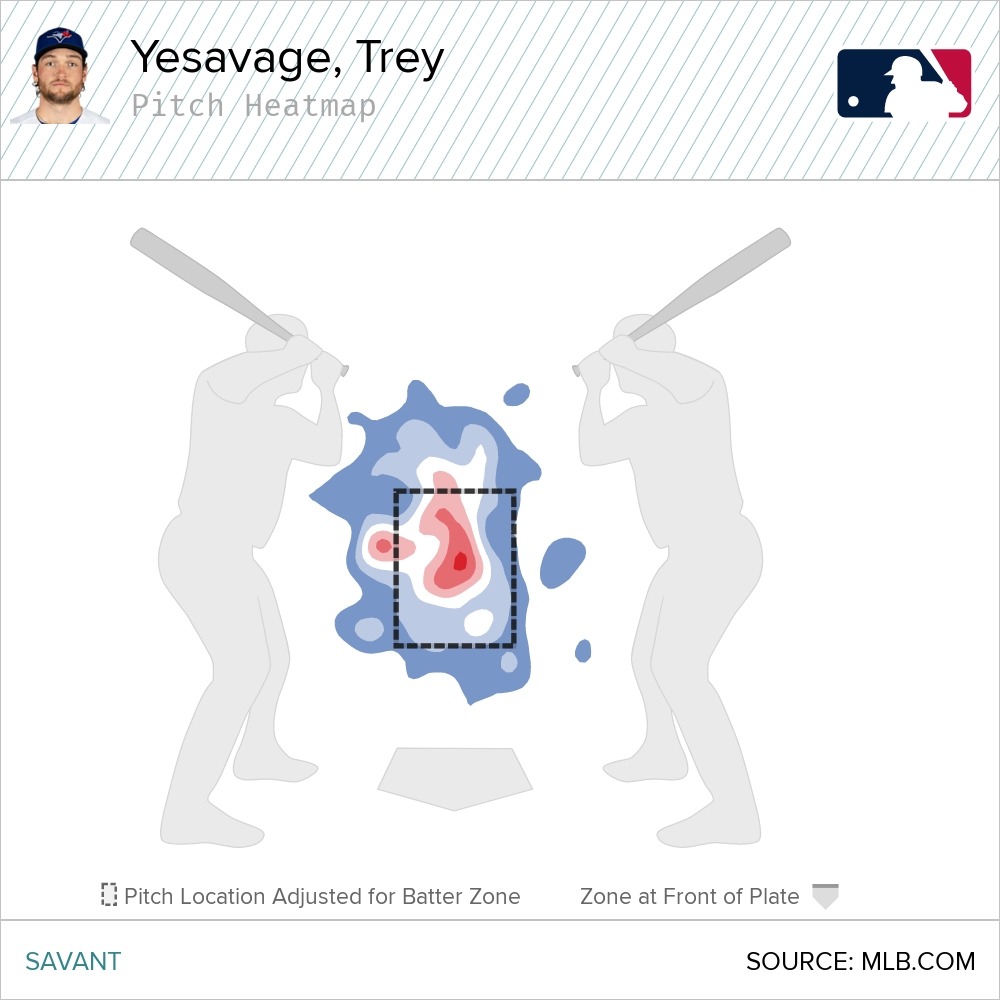
… whereas this year it’s lived precisely where it’s spent much more time at or near the top of the zone:
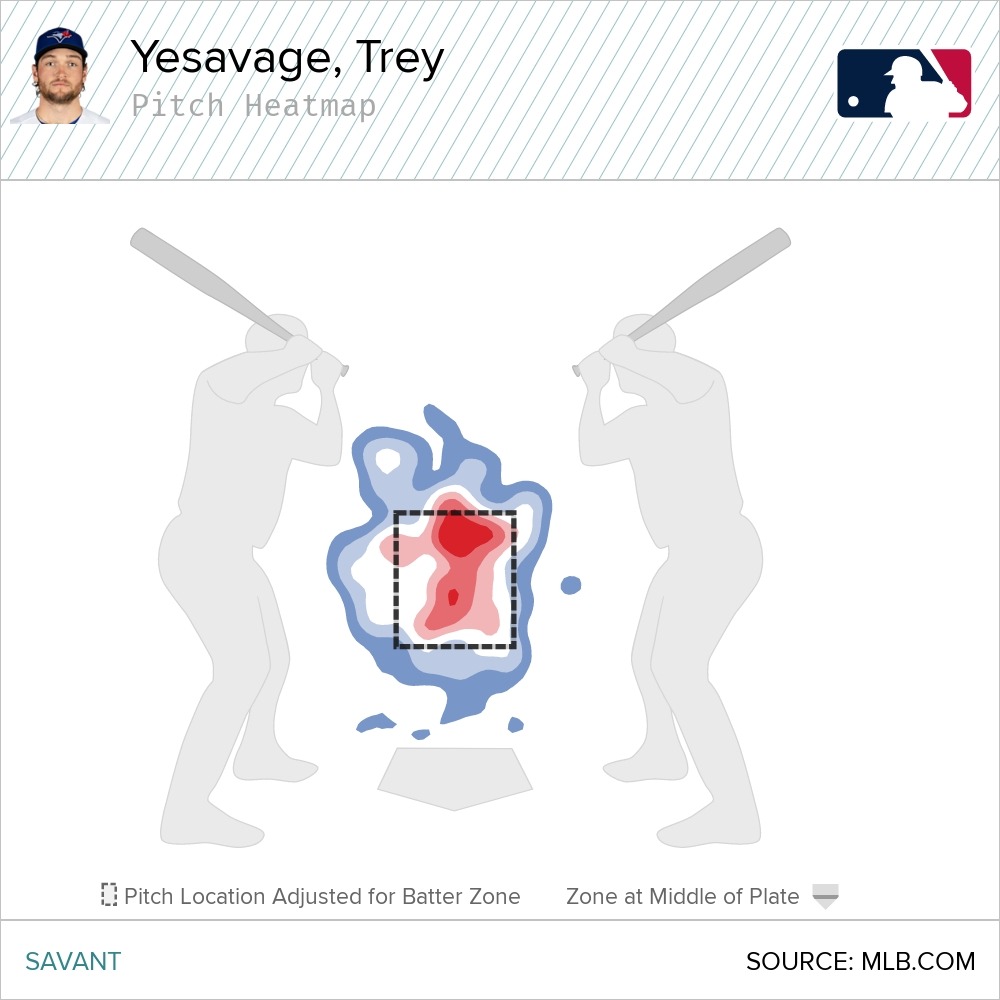
Commanding the heater at the top of the zone has also helped Yesavage use it as a more effective putaway pitch than it was in 2025. His 18 strikeouts with it nearly triple last year’s total (7).
From this information alone, it would make sense to assume that Yesavage’s location has improved overall as he’s developed at the MLB level — but that’s not exactly the case. The 22-year-old’s walk rate (11.0 per cent) is up slightly from last year (10.5 per cent), and his zone rate has fallen from 47.0 percent to 44.3 percent. Neither of those changes is too dramatic, but they are driven by a serious difficulty in harnessing the splitter this season.
Yesavage has thrown the pitch outside the zone far more frequently than last season, and opposing hitters are catching on, laying off of it more often when it isn’t a strike.
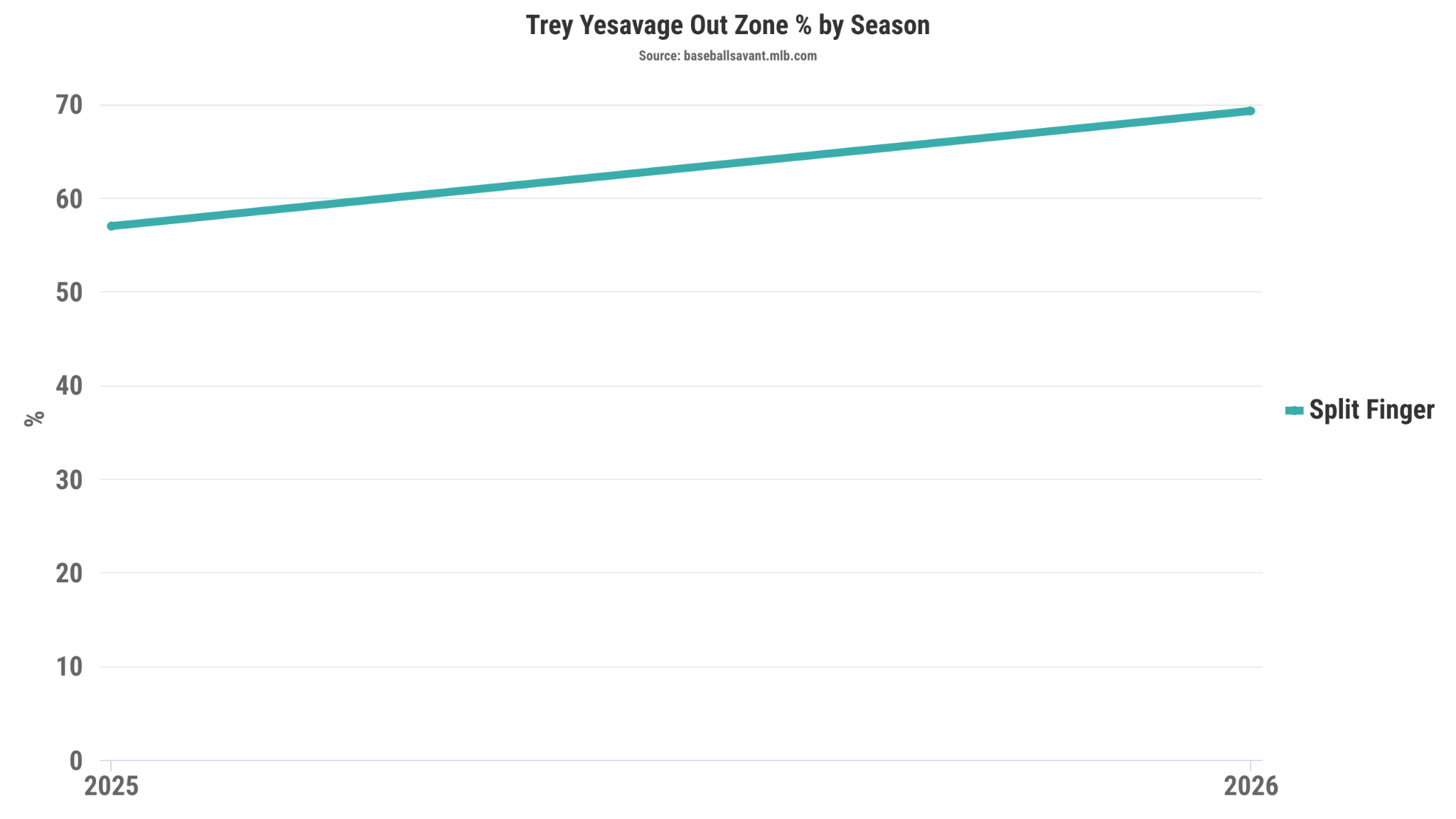
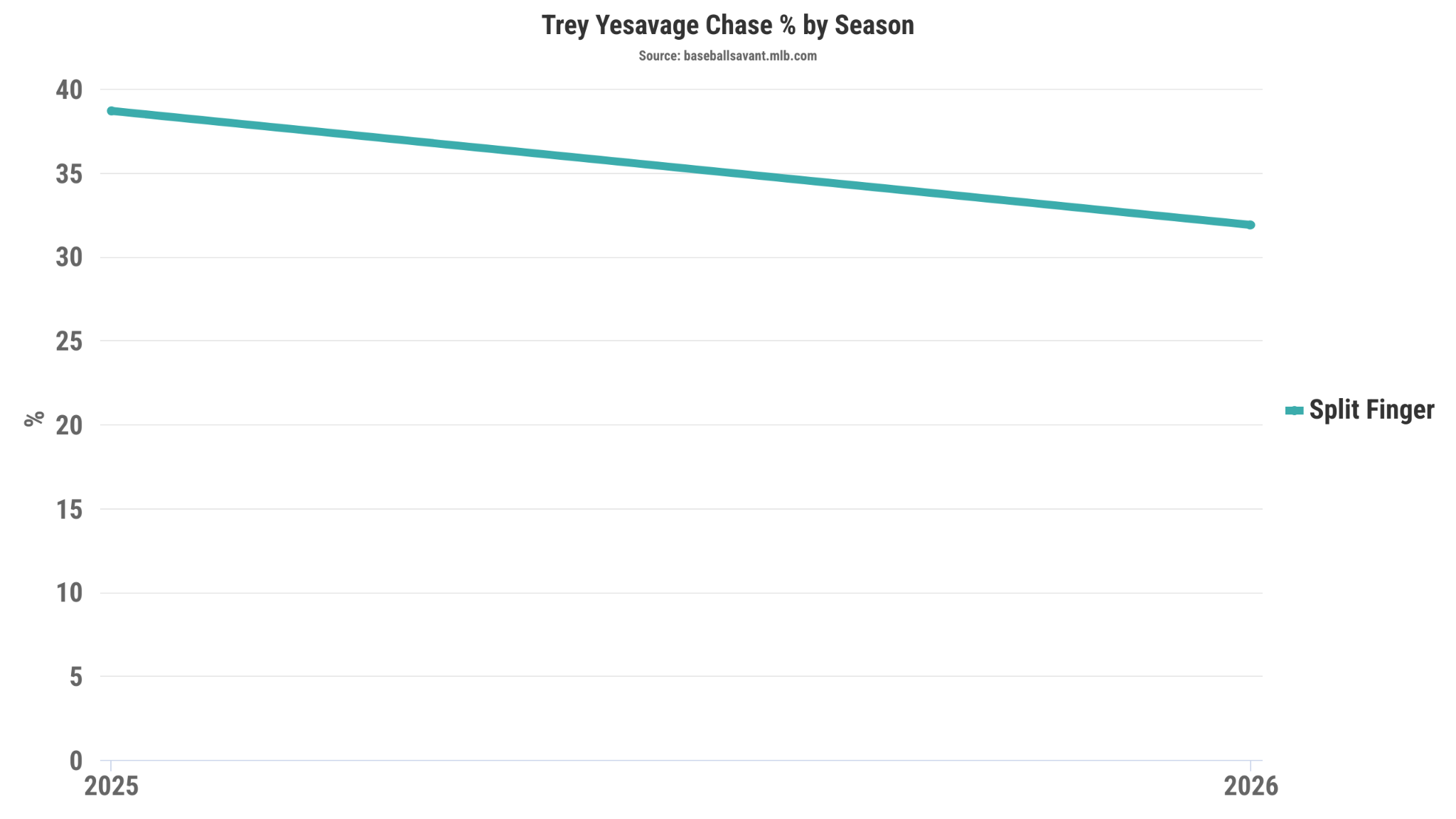
The pitch remains effective, earning a +3 run value that ranks seventh among all splitters according to Statcast, but he’s used it 45 more times than he did in 2025 and racked up 17 fewer strikeouts. It still generates an excellent whiff rate (42.6 percent) and is difficult to square up, but it hasn’t been quite the same weapon.
A decline in command with the pitch is the best explanation, as just like with his other two offerings, it’s moving essentially the same way it did last year.
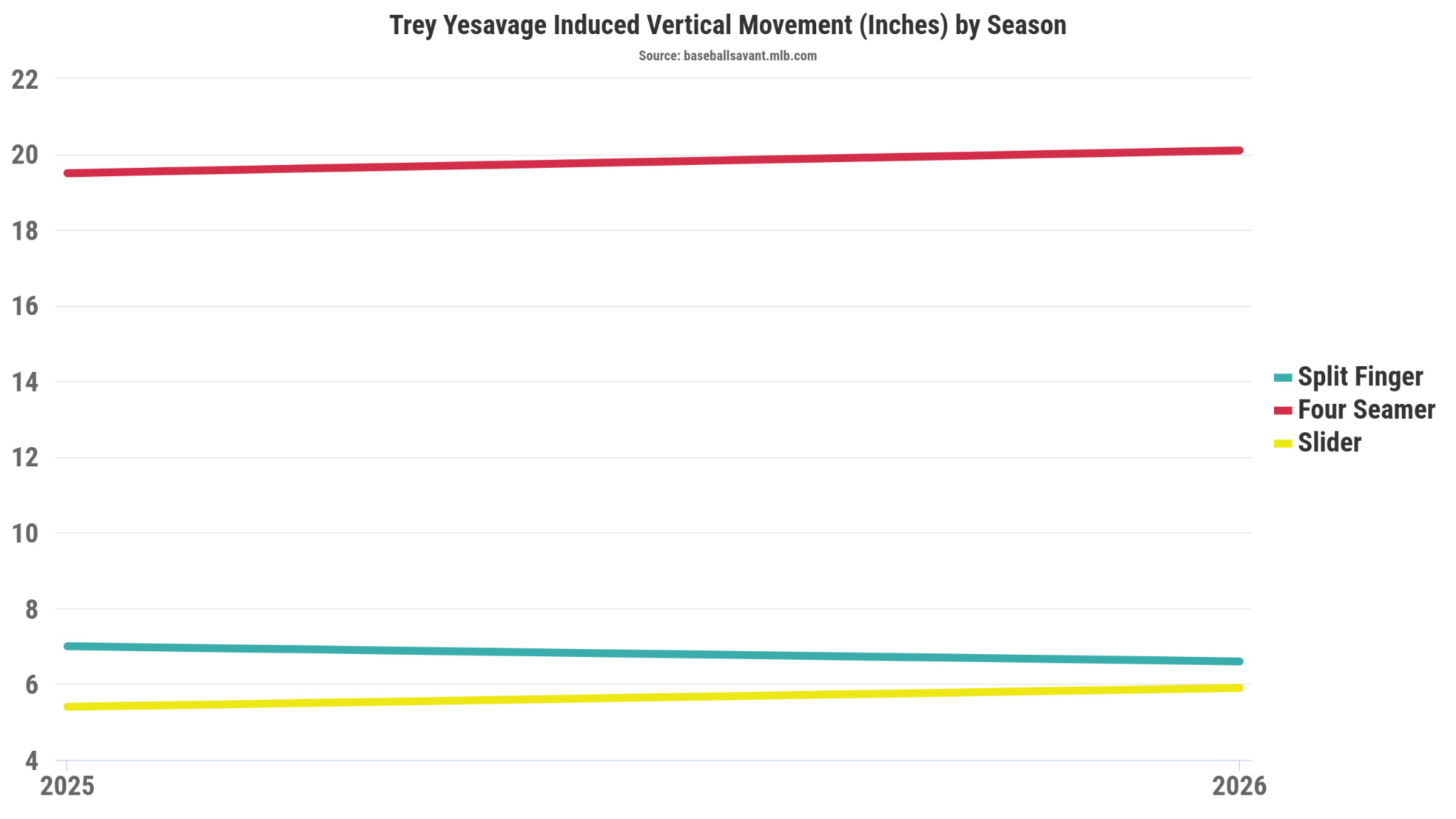
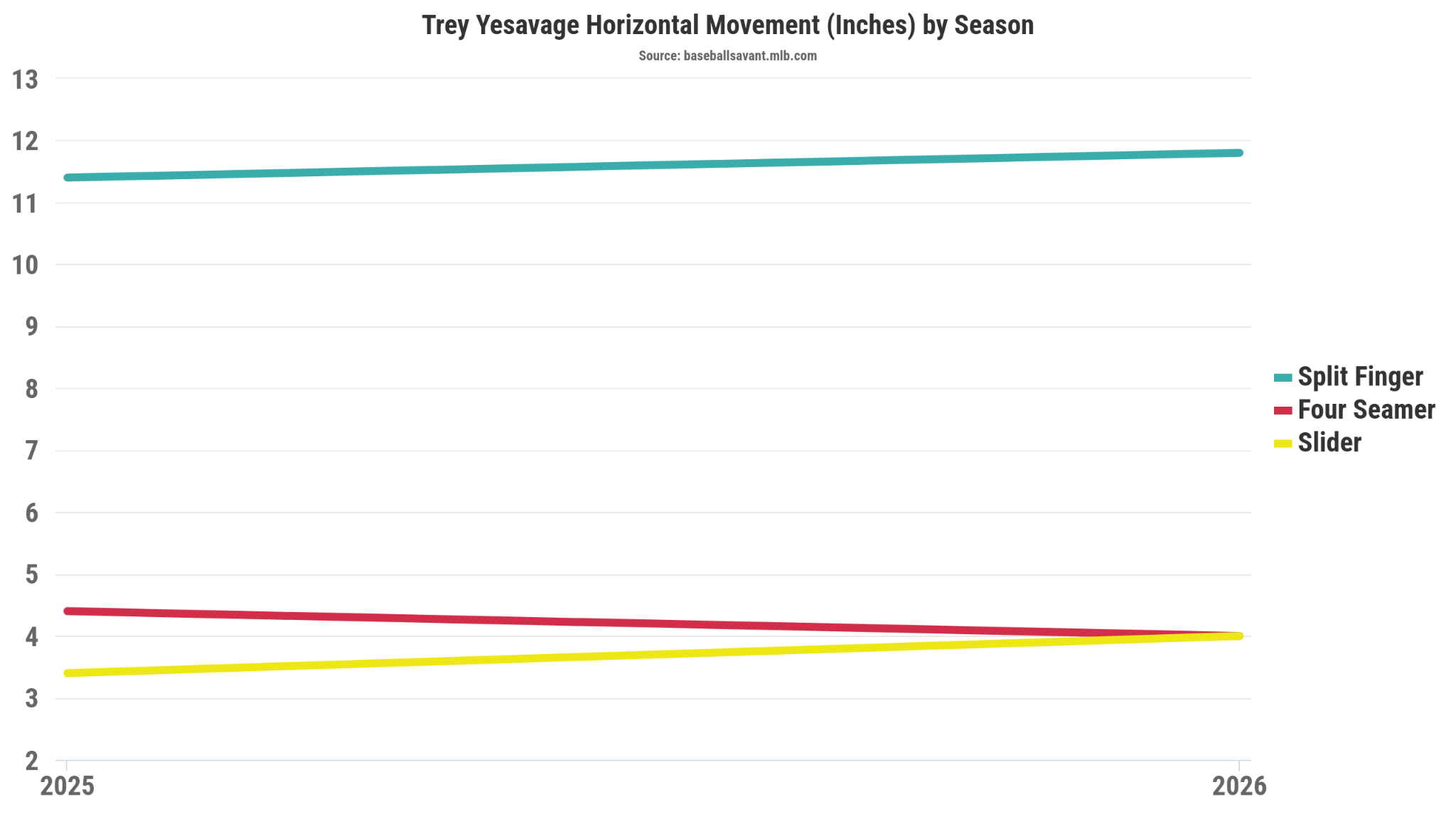
It’s not altogether surprising that Yesavage has performed differently than he did in his remarkable 2025. Considering how high he set the bar, a decline of some kind wouldn’t have been an unreasonable assumption. ZiPS projected a 3.89 ERA before the season, a solid result for a youngster finding his way in just his second pro season. There’s still plenty of 2026 yet, and his results could head in that direction, but what’s so interesting about his season so far is that his output has been remarkably similar to 2025 overall.
While he’s missing fewer bats, his contact management has compensated completely, and hitters are producing nearly identical meagre results against him to what they managed last year.
Everything about Yesavage’s MLB career comes with small-sample caveats, but, intriguingly, he’s already demonstrated two ways to be extremely effective. He’s played the role of a strikeout artist with a strong groundball rate who survives the loud contact he allows and a top-notch generator of soft contact who still gets his fair share of Ks. It’s not clear whether either description will fit him neatly in the years to come.
He could become the best of both worlds — a bat-missing wizard who keeps contact manageable — or he could start to get squared up again without a top-of-class strikeout to protect him. Something in between is the most likely scenario, but uncertainty is a dominant characteristic of any 22-year-old pitcher with fewer than 200 pro innings under his belt.