


The BOOX Go 10.3 Gen II delivers a sharp, paper-like reading and writing experience paired with the flexibility of Android. Its lightweight design, clean monochrome display, and broad file support make it an especially compelling option for users who want more from an e-ink device without giving up focus or comfort.
As Amazon’s Kindle ecosystem increasingly feels designed to keep users within its walls, BOOX continues to carve out a very different niche. After a few weeks with the Boox Go 10.3 Gen II ($419.99 at Amazon), it’s hard not to see the tablet as one of the more compelling Kindle Scribe alternatives. The device doesn’t try to replace my tablet or usurp my compact e-reader, but it also isn’t stripped down to a bare-bones writing slab either. Instead, BOOX pairs a sharp monochrome E-Ink display and lightweight design with enough Android flexibility to deliver a genuinely useful device for reading and writing.
Focused by design

Kaitlyn Cimino / Android Authority
The screen is the focal point of the Go 10.3 Gen II. Instead of chasing color E-Ink trends, BOOX intentionally kept this model focused on a sharp 10.3-inch 300ppi monochrome ePaper panel. On the standard version I tested, there’s no front light layer sitting above the display (more on that in a second), which gives the screen a cleaner, more paper-like appearance.
Book and document text look crisp, and handwritten notes stay sharp even with smaller chicken scratch. The background is also noticeably bright. It’s one of the nicer pure reading and annotation experiences I’ve had on an Android E-Ink tablet.

Kaitlyn Cimino / Android Authority
Even without BOOX’s higher-end BSR refresh system, handwriting still feels responsive enough that notes rarely lag behind the pen tip. At roughly 360g and just 4.6mm thick, the Go feels noticeably more comfortable for long writing sessions than some bulkier productivity-focused tablets. It’s substantial enough to feel useful at my desk, but still small enough to throw in a bag or airplane seatback pocket.
The Go pairs a 2.4GHz octa-core platform with 4GB of RAM and 64GB of storage, which ends up feeling more than responsive enough for typical E-Ink workloads like reading, annotating PDFs, web articles, and juggling note apps, though if you’re a power user the lack of any expandable storage might be a turn-off (there is OTG support, however). Meanwhile, the 3,700mAh battery is large enough that I was able to test the device throughout a weekend trip without worrying about bringing a charger.
The BOOX Go 10.3 Gen II’s monochrome display offers a noticeably cleaner, more paper-like appearance.
Battery life will vary heavily depending on usage (handwriting and apps demand far more screen refreshing than passive reading), but with my typical mix, the Go regularly lasts just under a week per charge. I mostly stopped checking battery percentages altogether after the first few days of this review period.
Buyers can also opt for the Go 10.3 Gen II Lumi ($449.99 at Amazon), which adds a front light for use in low lighting. The standard model I tested skips that layer, which, as I mentioned, helps give the display a slightly cleaner and more paper-like appearance. However, the tradeoff may be worth it if this is going to be your primary evening reading device. It will also cost you an extra $50.
Android-based e-ink experience

Kaitlyn Cimino / Android Authority
Like the rest of BOOX’s lineup, the Go 10.3 Gen II runs Android 15 (a big leap from the original Go 10.3’s Android 12), and that makes the tablet far more flexible than something like a Kindle Scribe or reMarkable tablet. You can install apps through the Play Store, sync cloud storage services, browse the web, and jump between multiple note-taking workflows without feeling boxed into a single ecosystem.
For readers frustrated with the Kindle ecosystem, BOOX’s Android flexibility feels genuinely liberating.
I regularly bounced between Libby, Pocket, Google Drive PDFs, web articles, and BOOX’s own note tools. For readers who are frustrated with Amazon’s increasingly restrictive Kindle ecosystem, that flexibility is very freeing. The device can also natively handle everything from EPUBs and PDFs to comics, Word documents, presentations, and archive files without constantly relying on conversion tools or cloud workarounds.

Kaitlyn Cimino / Android Authority
At the same time, BOOX’s software still occasionally feels like Android adapted for E-Ink rather than software fully designed around it. Menus can be dense, and some apps still require refresh adjustments and optimization tweaks to fit comfortably on an E-Ink display. Compared to the almost aggressively streamlined simplicity of a reMarkable or Kindle, the Go definitely asks a little more from the user.
Still, while the Go carries BOOX’s usual software complexity, this is one of the few BOOX tablets where the hardware and software feel most aligned. The clean monochrome display helps keep the Android flexibility from becoming distracting.
The active stylus compromise

Kaitlyn Cimino / Android Authority
One of the biggest changes from the original Go 10.3 is the switch from EMR to BOOX’s active InkSense Plus stylus technology. I had my doubts about the change, but to BOOX’s credit, the experience here is better than I feared. Handwriting feels natural during regular note-taking. The screen surface also has enough texture to keep the stylus from feeling overly slippery (or iPad-like), for a more paper-like experience.

Kaitlyn Cimino / Android Authority
However, battery-free EMR pens are wonderfully low-maintenance because they never need charging. The Go’s active stylus requires its own topping up via USB-C and its own battery management. More than once, I’d settle down to read or write and realize my pen was still on the counter or at the bottom of my bag. I also became weirdly protective about making sure the pen was attached before leaving the house (or the cafe table after a stint of work al fresco). The magnetic attachment is decent, but not reliable enough that I’d comfortably carry the tablet around loose without a folio case.

Kaitlyn Cimino / Android Authority
The folio case itself also feels a bit cheaper than I expected for a device in this price range. It gets the job done, but I loathe the detachable magnetic closure, which I’m confident I will eventually lose. I still think the case is close to essential because of the stylus attachment situation, but it doesn’t feel nearly as refined as the tablet itself.
BOOX Go 10.3 Gen II review verdict: Should you buy it?

Kaitlyn Cimino / Android Authority
If you’ve been feeling boxed in by Amazon’s Kindle ecosystem, the BOOX Go 10.3 Gen II might tempt you away. It pairs a fantastic monochrome display with liberating Android flexibility, while still avoiding the bloated feel some E-Ink tablets fall into. The software can still be a little messy, and I’m not fully sold on the switch to an active stylus, but the overall experience is more cohesive than many previous BOOX devices.
The Amazon Kindle Scribe ($629.99 at Amazon) is still the easier recommendation for users who want the simplest possible reading experience inside Amazon’s ecosystem. The reMarkable Paper Pro ($629 at Amazon) remains the more refined pure writing tablet, and is a favorite of mine for long-form writing when paired with the Type Folio, but there’s a decent jump up in price.
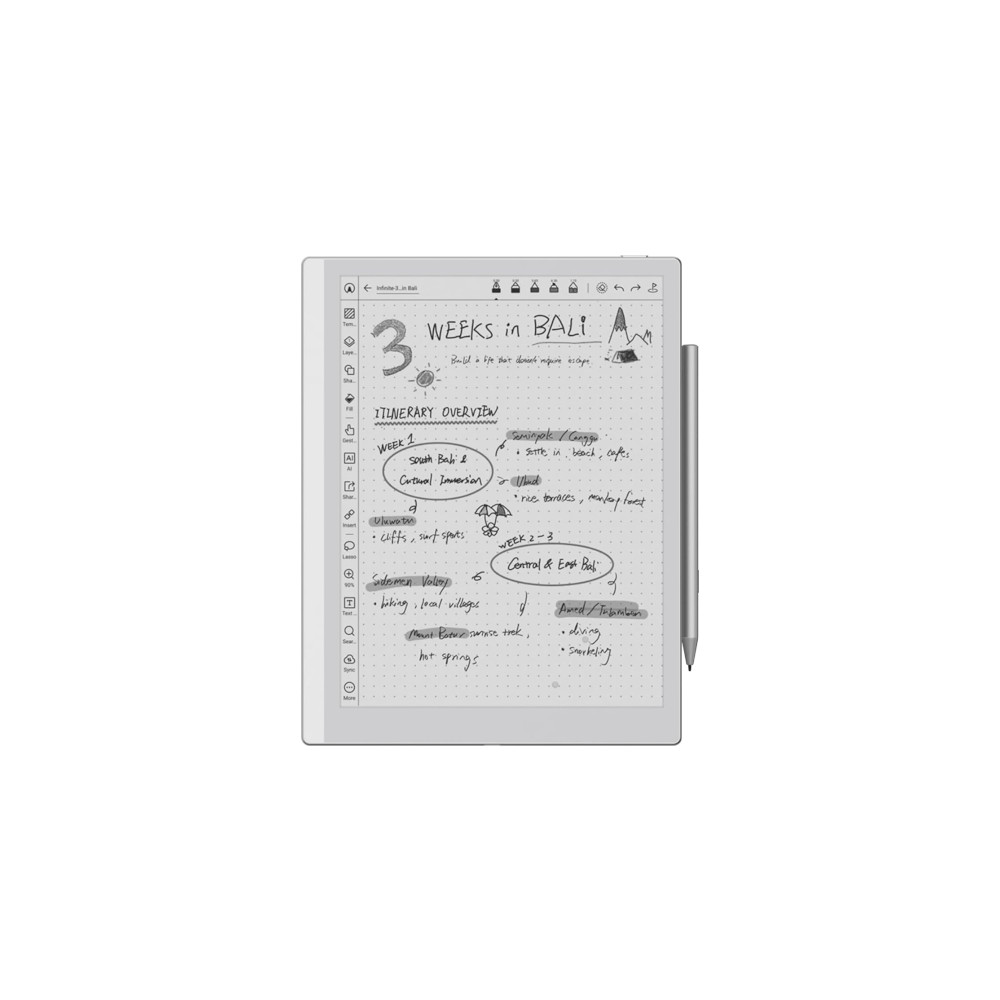
Sharp, paper-like reading and writing experience • Lightweight, thin design • Flexible Android-based software
MSRP: $419.99
The BOOX Go 10.3 Gen II pairs a sharp monochrome e-ink display with flexible Android software, plus stylus support, for focused reading and notetaking.
Positives
- Sharp, paper-like reading and writing experience
- Lightweight, thin design
- Flexible Android-based software experience
- Excellent file format support
Cons
- Stylus requires charging
- BOOX software can feel overly dense
- Front light costs extra
- Folio case lacks refinement
Thank you for being part of our community. Read our Comment Policy before posting.